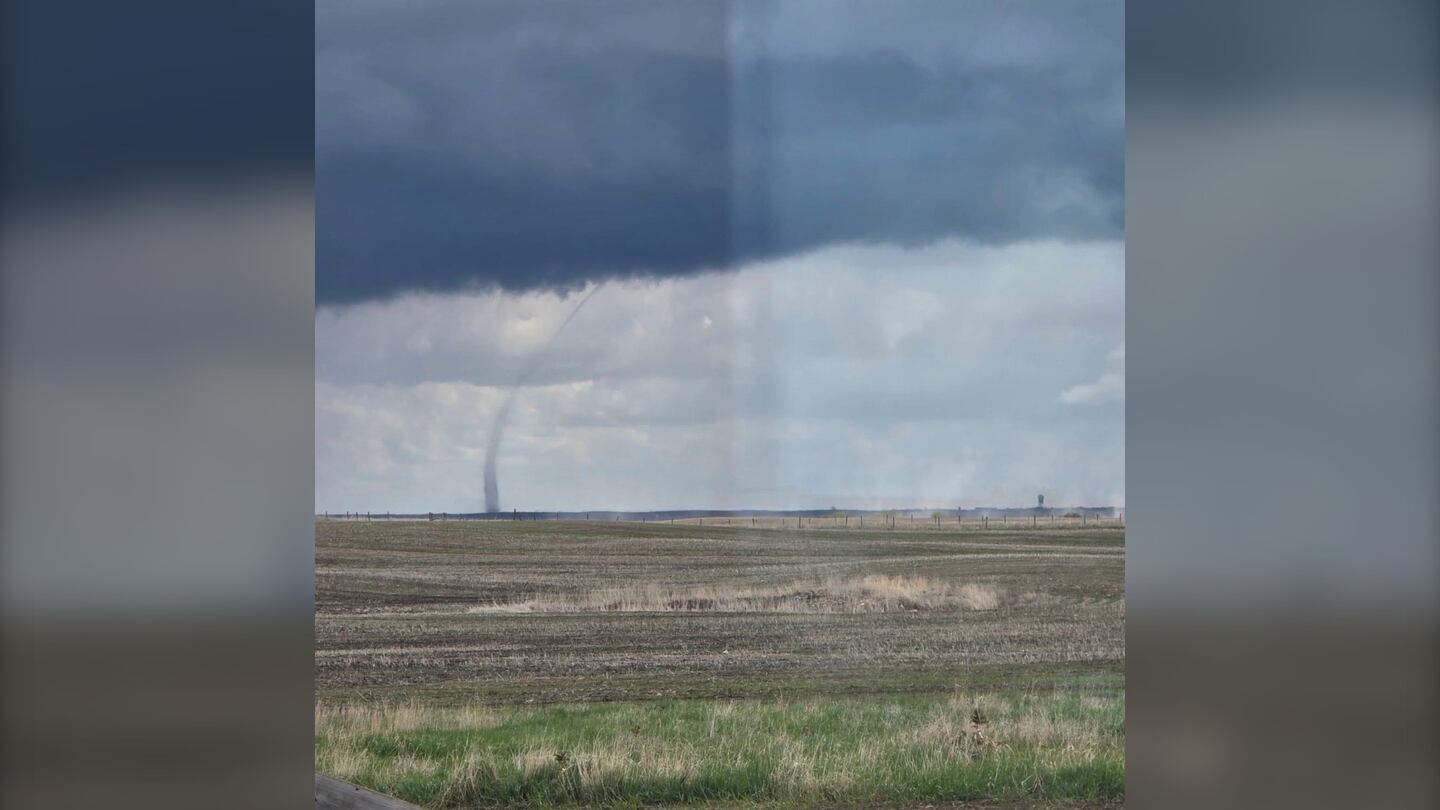
Saskatchewan may have experienced its first tornado of the year, according to early reports north of Regina. In several posts to social media Friday afternoon, eagle-eyed residents near Bethune spotted what appeared to be a landspout tornado in the area. Bethune is located approximately 50 kilometres northwest of Regina. If confirmed by Environment and Climate Change Canada (ECCC), it would be the province’s first tornado of 2026. At 3:16 p.m., ECCC issued a special weather statement covering much of central and east central Saskatchewan, warning that funnel clouds were expected to develop – with some having the potential of becoming weak landspout tornadoes. According to ECCC meteorologist Matt Loney, the weather service will take reports it has received and posts to social media and weigh them against the data captured by radar and other sources. “This particular case, it looks like landspouts, which are a form of tornado, but the mechanism is a bit different than your more destructive tornadoes, which come from a rotating updraft in a big supercell storm,” Loney said, adding landspouts are formed at the bottom of a thunderstorm while it is still growing. Landspout tornadoes are usually mild in their severity. In a departure from previous years, Saskatchewan received significant snowfall followed by steady rainfall this spring. The additional moisture could have an impact on the development of severe weather later in the year. “If you’ve got a lot of greenery, you get something called evapotranspiration, which adds more moisture to the atmosphere during the day,” Loney explained. “The sun starts hitting the ground, it draws up the moisture in the ground and it actually has the potential to fuel more storms later on as things green up. That is a factor overall in the humidity that can generate severe storms.” However, Loney does not expect any dangerous tornadoes to be formed as a result of the current storm system moving through southern Saskatchewan. “The factors driving it from a weather perspective are relatively weak,” he noted. “The radar is showing these quick cells that pop up within 20 minutes, but then they kind of collapse within an hour, so they’re quick forming, and then they basically dissipate upon themselves.” If you do spot a landspout tornado, Loney recommends residents should still keep their distance and exercise caution. “They typically don’t travel very fast, but keep your distance,” he noted. “They can cause injuries, certainly, if you’re caught up in one.”
|