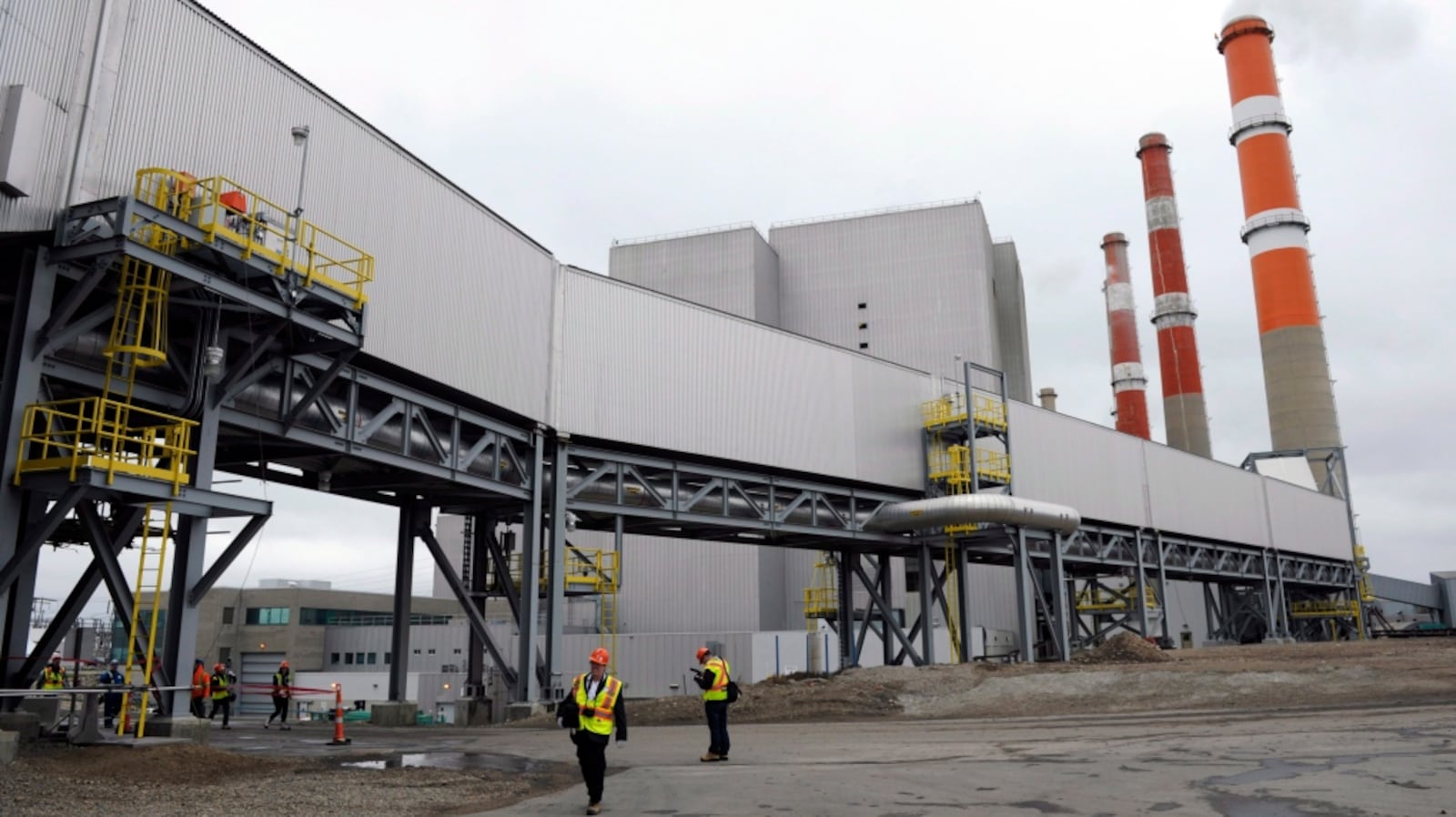
Environmental advocates have taken their lawsuit against the Government of Saskatchewan and SaskPower’s plans to extend the lives of its coal-fired power plants to the province’s highest court. The appellants, which include advocacy groups Citizen for Public Justice and the Saskatchewan Environment Society, took their litigation to the Court of Appeal for review after a Court of King’s Bench judge dismissed their case in January. In the decision, the judge highlighted “climate change is real,” and “therapeutic steps should be taken.” “I respectfully posit, the Court’s role is to administer justice, resolve legal disputes and interpret the Constitution and laws, acting as the independent judicial branch of government that upholds the rule of law and protects rights,” the decision went on to read. “It is not for the Courts to sift through the granular details with a view to directing departments and government agencies as to the appropriate steps to be taken to reach a particular goal.” This ruling forced the applicants to file an appeal with the higher court in hopes of sending the case back to the Court of King’s Bench for a hearing on the lawsuit’s merits. Appellants’ argumentsThe environmentalists posed a pressing question to the panel of Court of Appeal justices Friday: can the courts set green house gas (GHG) reduction minimums? “Unconstrained emissions by the respondents, both by state actions and as prescribed by law, are not charter compliant,” Glenn Wright, co-counsel for the appellants argued. “This is particularly so when it is an established fact when five years ago the Supreme Court of Canada said, ‘climate change is real.’ It is caused by greenhouse gas emissions resulting from human activities and poses a grave threat to humanity’s future. The only way to address the threat by continuing to reduce greenhouse gas emissions.” It is on this premise the appellants believe the continued use of fossil fuel-based power generation violates Section 7 and Section 15 of Canada’s Charter of Rights and Freedoms. Section 7 “guarantees everyone the right to life, liberty, and security of the person, and the right not to be deprived thereof except in accordance with the principles of fundamental justice.” While Section 15 “guarantees equality rights, ensuring every individual is equal before and under the law without discrimination based on race, national/ethnic origin, colour, religion, sex, age, or mental/physical disability.” “Over the past several years and decades, this wicked problem of dangerous climate change is not being addressed by the legislature or the executive branches,” Wright said. “This is why citizens all across Canada and all over the world are turning to the courts.” Canada signed onto what is known as ‘The Paris Agreement,’ a legally binding international treaty on climate change, in 2016. Advocates in Saskatchewan believe the provincial government has not held up its end of the bargain, turning to coal power as a bridge to a nuclear future. They want the court to step in force the province to cap emissions and reach its reductions targets in order to adhere to the provisions of the agreement. “The real question we are dealing with here today is whether or not Saskatchewan justices agree today is the day they’ll stand with science, reason, judges from a growing number of countries from around the world and Saskatchewan citizens,” lawyer Kaitlyn Harvey told the courtroom on Friday. “[They] are sick of waiting for the next election and will be asking politicians to start saying they do care about climate change.” Finally, the appellants believe the court does have the authority to overrule the policy decisions laid out by the government. “They have jurisdiction and the right to turn a statutory policy,” Harvey added. Government responseIn response, lawyers representing the government asserted the King’s Bench ruling, arguing the judicial arm of democracy should not overreach into the legislative branch. “The government has met its obligation to communicate emissions regulations,” said senior Crown counsel Elaine Thompson. “The amnesty of the regulations is a matter of policy decision.” Thompson went on to argue the province is well on its way to securing its emissions targets. “Saskatchewan has chosen to address climate change through policy, not an act of commitments,” she said. “They’re proposing the Paris Agreement and its objectives ought to be law in Saskatchewan. There’s no case law which supports that.” International lawHarvey added as part of her arguments the lower court judge failed to consider international law and regulations surrounding green house gas emissions when deciding whether to hear the merits of the case. She pointed to an adopted opinion by the International Court of Justice (ICJ) which says states have an obligation to adopt climate change mitigation measures to secure a sustainable environment for future generations. “Judges are bound to the court, governments are bound to fulfill those obligations,” Harvey argued. “There are multiple treaties of which Canada is signatory for courts to recognize those obligations.” “So the judge should have been bound by those [ICJ] decisions?” Justice Jerome Tholl asked. “We suggest minimum standards courts may consider the ICJ opinion on this and other cases by interpreting domestic law with international instruments,” Harvey responded. “[They] ought to, she should consider the ICJ.” “Saskatchewan did not sign those treaties,” countered Justice Neal Caldwell. “The ICJ advisory committee would not trump the Constitution Act.” For the ballot boxThompson believed the political debate held as part of this case should be had inside a court room. “The remedies sought are political questions and best to be rest at the ballot box,” she told the court. However, the appellants say they do not have the time to wait for an election for the public discourse to make a difference. “Here’s the situation we found ourselves in today: both the opposition party and the government party have put forward platforms that say they’ll expand fossil fuel generation,” said Wright. “Our applicants right now don’t have an elective choice.” The panel of three Court of Appeal justices reserved their decision Friday to a date, ‘in due time,’ in order to review all counsel submissions.
|